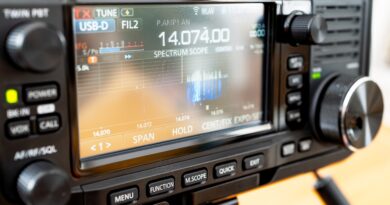
2026 Summer Field Day CW Reflections
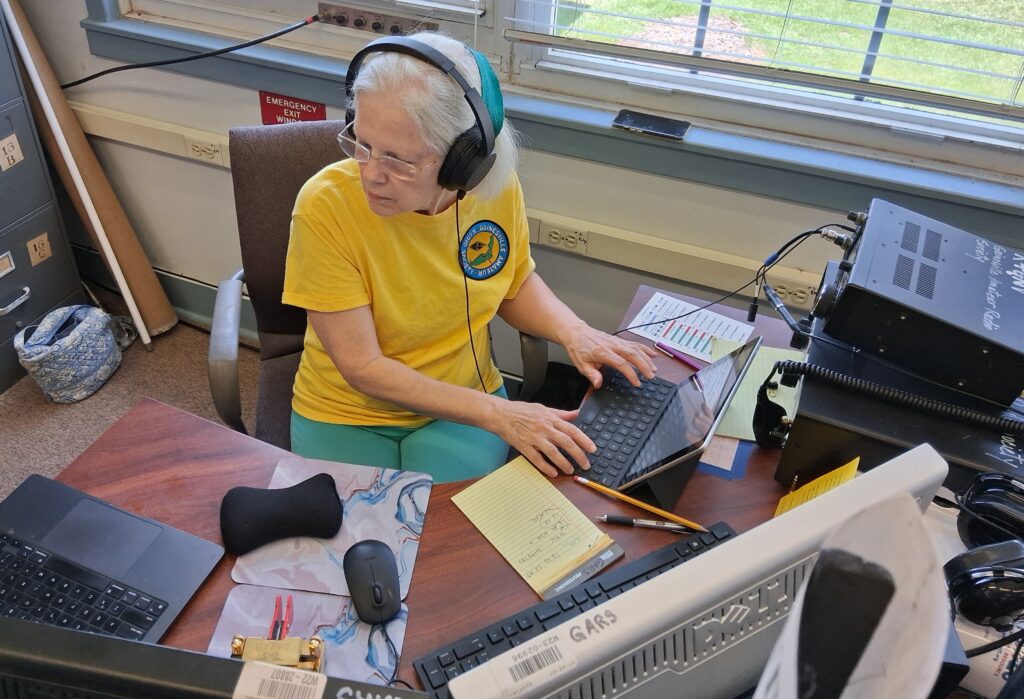
Lorilyn Roberts KO4LBS logging CW Contact SFD 2026, Waldo, Florida
Summer Field Day this year in Waldo, Florida, was one for the record books. We had some amazing visitors, and I say this partly because I love seeing women and young people stop by to learn about ham radio. What struck me in particular this year was that the visitors weren’t anxious to leave. They wanted to stay. It wasn’t just a quick perusal; it was engagement.
I probably spent 30 minutes with a ten-year-old boy, Abraham, and his dad before they went down and made a bunch of contacts on GOTA. I let Abraham play around with my paddle connected to the ICOM 7300 in the off-air mode so he could hear his dits and dahs, and I suggested some websites to help him learn CW.
I also strongly encouraged Abraham’s dad to get his son involved in ham radio, citing how it could help him with STEM subjects in school, and that I knew someone who earned his ham radio license at seven, later graduated from the U.S. Naval Academy, and became the largest shareholder in Western Digital.
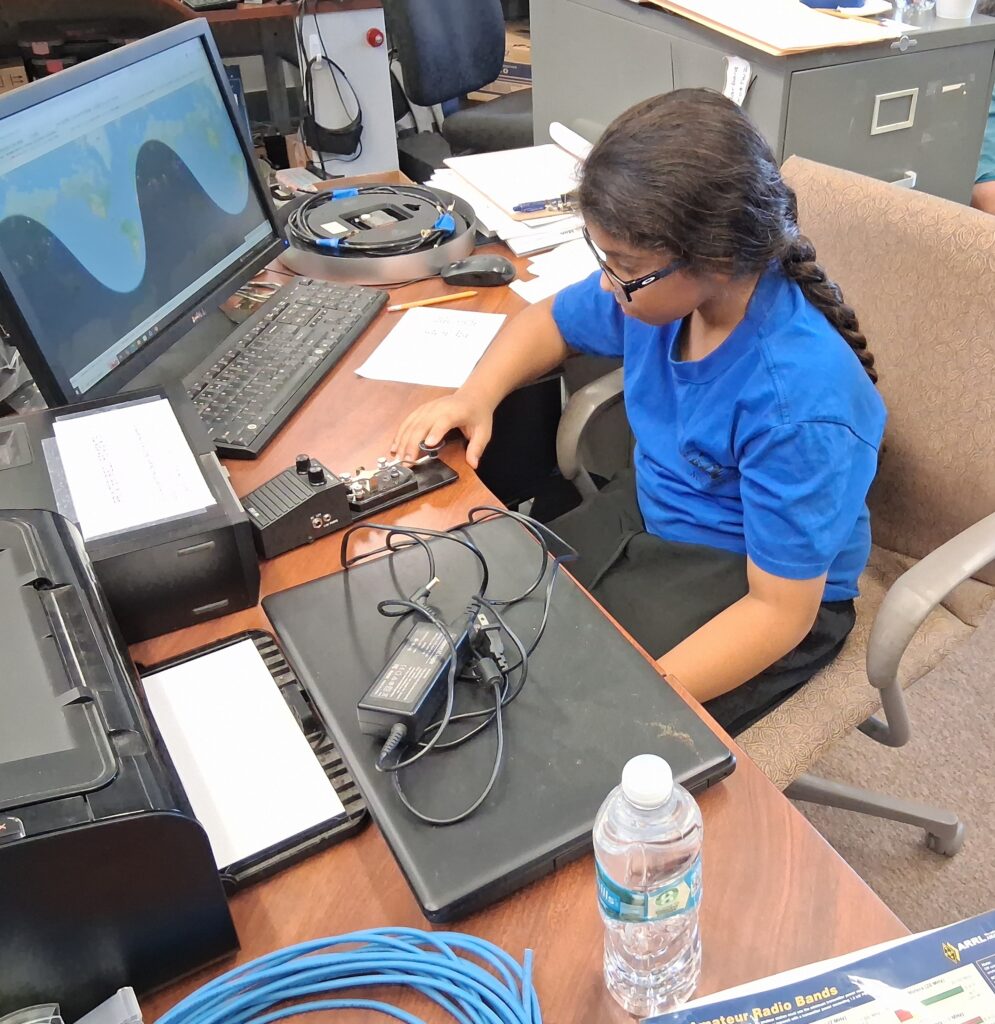
The personalities in the GARS (Gainesville Amateur Radio Society) Club work well together, and the group is balanced, making it easy to include everyone. We have some new members who have jumped right in and are contributing in amazing ways.
I focused on CW and had some unique experiences that will help me as a ham radio operator. I’ll give one example that will stick with me for a long time, as this is what Summer Field Day is all about. I had just worked someone on CW, and the reverse beacon showed he was operating at 29 words per minute. When I finished the contact, the next operator was sending at about seven words per minute.
Without missing a beat, the operator slowed down from 29 WPM to match the caller’s speed. It took a while because the “newbie” struggled, but they made the contact, and then the “pro” went back up to 29 words per minute, and things moved on.
What grace, what patience, what an amazing CW operator. That will stick with me.
I think as a club, GARS has embraced that kind of camaraderie where we are there to help each other. We aren’t trying to impress other clubs with how many points we score or how good we are. In the world of ham radio, where it’s so easy as a newbie and even with some experience to feel inadequate, that can speak louder than training sessions, charts, videos, and buying the next great radio or antenna that’s just been released. It’s simply about relationships, helping each other be the best at what we enjoy, and contributing where we can.
The other highlight of the weekend for me was making a contact with a special expeditionary CW group in the Aleutian Islands off Alaska’s coast. I had just shared earlier in the day that I had never made a contact in Alaska. Then, a couple of hours later, I did.
I was curious as to how unusual that was, on 15 meters, so I asked ChatGPT this question:
How difficult would it be to reach the Aleutian Islands from Gainesville, Florida, on 15 meters using CW?
ChatGPT responded: “Reaching the Aleutian Islands (approx. 4,600 miles away) from Gainesville, FL on 15 meters using CW is moderately difficult. It is a major DX path that is entirely possible but relies heavily on solar conditions, optimal timing, and precise signal beaming.”
One of the most amazing things about CW is that you can literally reach anybody, anywhere in the world.
I imagine the CW ops out there in the middle of the Bering Sea were as excited to reach someone in Florida as I was to reach them on a rare DX operation.
For those who are curious about the details, I did this late Saturday afternoon, EST time. In Alaskan time, it would have been early evening, which is considered the optimal time for that DX contact. The solar conditions must also be optimal. I used a Begali paddle at 25 wpm on 100 watts, and the wire-dipole antenna specially erected for Summer Field Day. The antenna worked extremely well, so kudos to the team that put that up.
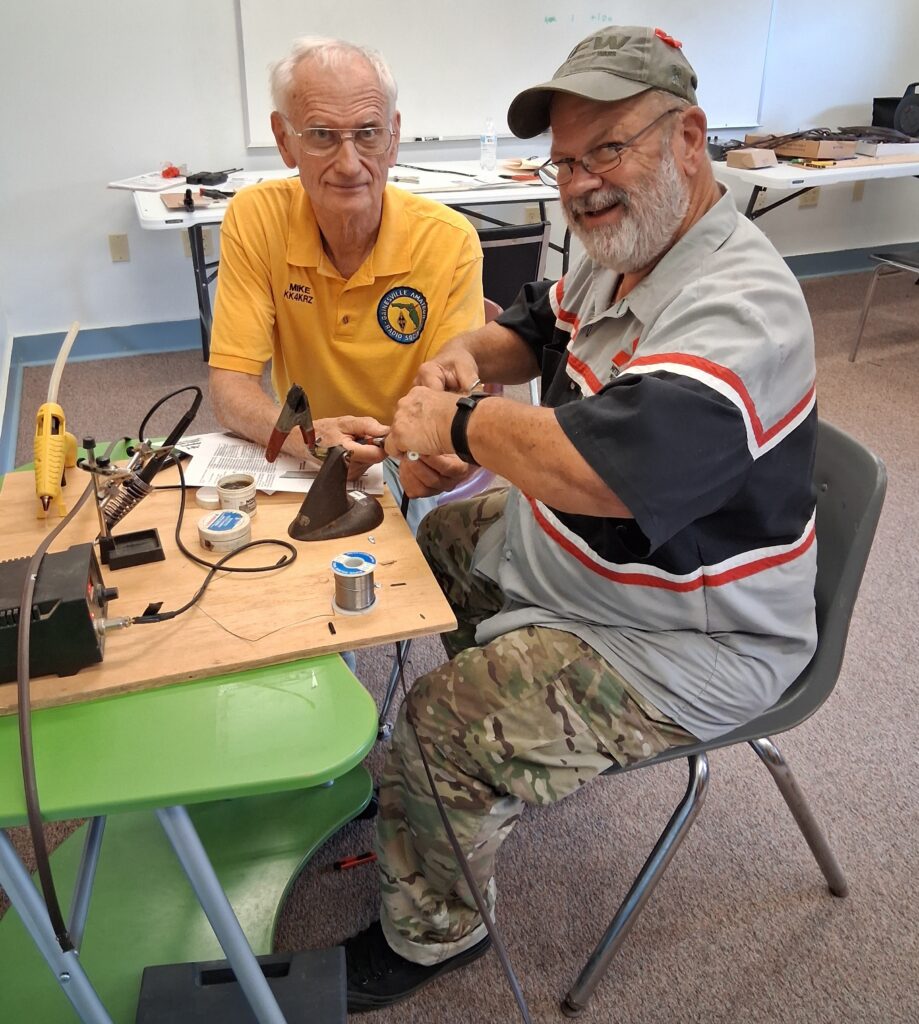
Later I asked who did that magnificent work on the antenna, and I was told Shannon Boal, K4GLM, designed it; Jim Carr, KC4MHH; Terry Gordan, K4TMG; Tom Warren, KC8DHX; Debra Boal, KI4CVS; Bill Sewell, KR4EKZ; Andy Bryson, KO4MLY; Eddie Dempsy; Larry Rovak, WB2SVB; Vicki Miller, W0VIX; and Kevin Miller, N1KLM, who set it up in the blazing summer heat.
A little side humor: I was still using that antenna on Sunday when a couple of operators started taking it down. Fortunately, somebody caught it in time. I didn’t know that was even happening, so I switched to another antenna, though it wasn’t quite as good. That dipole was phenomenal.
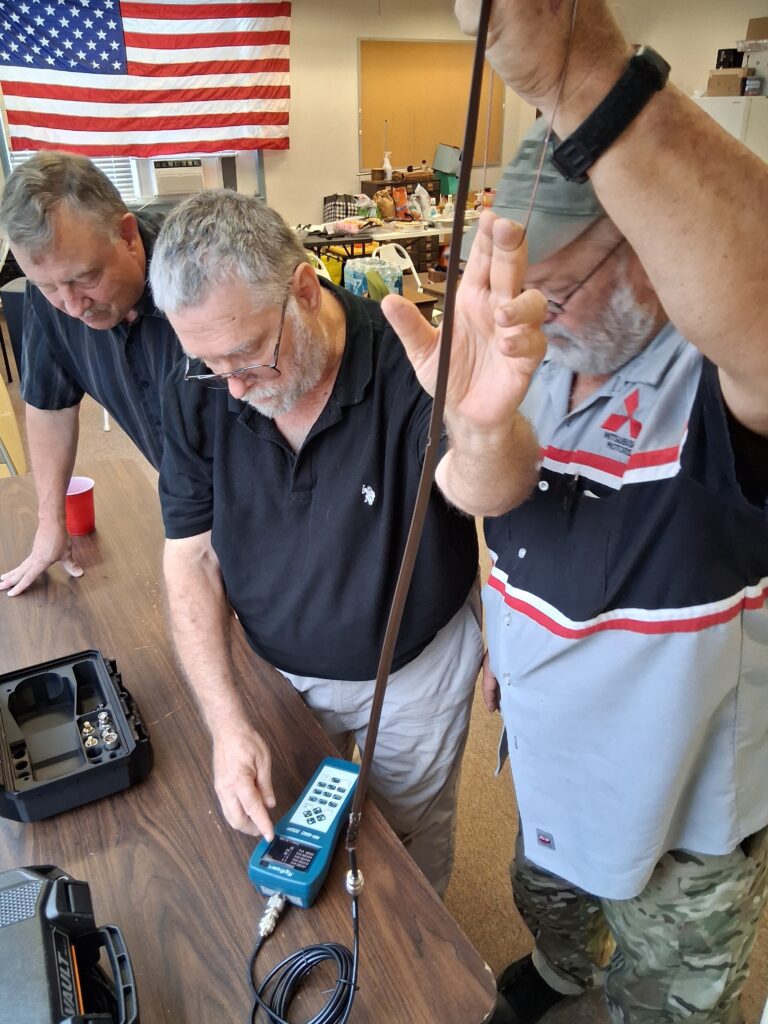
A surprising thing happened on Sunday afternoon: suddenly, nobody could hear anything on the radio. Any guesses as to why? Turns out, somebody downstairs started vacuuming. When they stopped vacuuming, everything returned to normal. I don’t think I ever would have figured that one out, so there is always something new to learn.
I want to thank everyone who made it such a success, especially the overnighters, Tom Warren, KC8DHX, and Shannon Boal, K4GLM, who allowed me to stay on the air late. And again, a warm thank you to the hams who came in a week early to set up that awesome dipole so I could make that Alaska contact on 15 meters.
I also want to give a shout-out to Terry Gordan (K4TMG), Mike Martell (KK4KRZ), Barbara Matthews (KO4TWZ), Debra Boal (KI4CVS), Ken Miller (KF4ULO), and Andy Bryson (KO4MLY), who helped me whenever I had a question or concern. They were “on it.” Thanks also to any I missed and for making the day such a huge success.
I had a blast on CW, eating all those delicious desserts, and sharing the day with such great hams. Let’s do it again next year!
Article by Lorilyn Roberts, KO4LBS, and photos by Mike Martell, KK4KRZ